



The top 10 best malaria drugs in Nigeria 2026 reveals the most effective treatments fighting the country’s deadliest disease. Coartem tops this list as the gold standard malaria drug in Nigeria and the most trusted choice among doctors, pharmacists, and patients across the country.
Nigeria accounts for nearly 27% of the global malaria burden. With an estimated 55 million malaria cases and close to 90,000 deaths every year, Nigeria remains the country most affected by malaria in the world. From Lagos to Kano and Port Harcourt to Enugu, malaria affects Nigerians regardless of age, income, or location.
- Quick Summary: Top 10 Best Malaria Drugs in Nigeria 2026
- How We Ranked Nigeria’s Best Malaria Drugs
- 1. Coartem (Artemether/Lumefantrine) – Gold Standard
- 2. Lonart DS (Artemether/Lumefantrine) – Best Affordable ACT
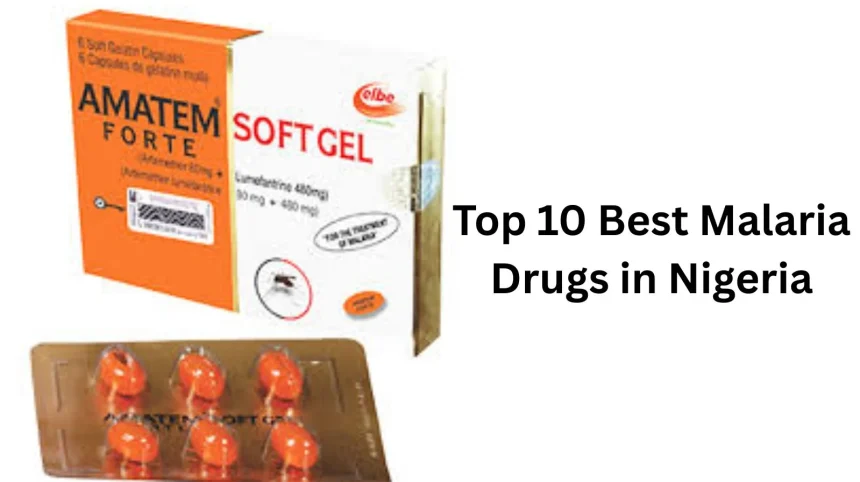
- 3. Amatem Softgel (Artemether/Lumefantrine) – Best for Resistant Malaria
- 4. P-Alaxin (Dihydroartemisinin/Piperaquine) – Best for Drug-Resistant Strains
- 5. Camosunate (Artesunate/Amodiaquine) – Best Combination ACT
- 6. Artesunate Injection – Best for Severe and Complicated Malaria
- 7. Quinine – Best Backup for Severe Malaria and Pregnancy
- 8. Fansidar (Sulfadoxine/Pyrimethamine) – Best for Malaria Prevention in Pregnancy
- 9. Amalar (Sulfadoxine/Pyrimethamine) – Best Affordable Prevention Drug
- 10. Chloroquine – Best for Non-Falciparum Malaria and Prevention
- Understanding Malaria Drug Classes in Nigeria
- Frequently Asked Questions
- Conclusion: Fighting Malaria With the Right Drug
Choosing the right malaria drug matters. Wrong treatment leads to treatment failure, drug resistance, and death. This guide shows the most effective, NAFDAC-approved malaria drugs available in Nigerian pharmacies in 2026.
Quick Summary: Top 10 Best Malaria Drugs in Nigeria 2026
- Coartem (Artemether/Lumefantrine) – Gold standard ACT, WHO first-line treatment (₦4,000–₦10,500)
- Lonart DS (Artemether/Lumefantrine) – Best affordable ACT equivalent (₦3,500–₦4,500)
- Amatem Softgel (Artemether/Lumefantrine) – Best for chloroquine-resistant malaria (₦3,000–₦4,000)
- P-Alaxin (Dihydroartemisinin/Piperaquine) – Best for drug-resistant strains (₦2,500–₦4,000)
- Camosunate (Artesunate/Amodiaquine) – Best combination ACT for uncomplicated malaria (₦1,500–₦2,500)
- Artesunate Injection – Best for severe/complicated malaria (₦2,000–₦3,500 per vial)
- Quinine – Best backup for severe malaria and pregnancy (₦1,500–₦3,000)
- Fansidar (Sulfadoxine/Pyrimethamine) – Best for malaria prevention in pregnancy (₦500–₦1,200)
- Amalar (Sulfadoxine/Pyrimethamine) – Best affordable prevention drug (₦440–₦800)
- Chloroquine – Best for non-falciparum malaria and prevention (₦200–₦600)
Source: NAFDAC drug registry, Nigerian pharmacy price surveys, WHO treatment guidelines, and Nigerian Federal Ministry of Health antimalarial policy as of 2026. Prices reflect current Nigerian market rates and may vary by location.
How We Ranked Nigeria’s Best Malaria Drugs
Our ranking looks at many factors. These include WHO treatment guidelines, Nigerian Federal Ministry of Health antimalarial drug policy, drug efficacy rates, availability in Nigerian pharmacies, NAFDAC approval status, and patient safety profiles. We also considered how well each drug handles Plasmodium falciparum, the dominant and most deadly malaria parasite in Nigeria. Price ranges, ease of use, and suitability for different patient groups guided our final rankings.
1. Coartem (Artemether/Lumefantrine) – Gold Standard
Coartem is the best malaria drug in Nigeria and the WHO-recommended first-line treatment for uncomplicated Plasmodium falciparum malaria. Manufactured by Swiss pharmaceutical giant Novartis, Coartem combines artemether and lumefantrine to destroy malaria parasites rapidly and completely. Nigerian doctors consider Coartem the gold standard in malaria treatment.
Key Facts:
- Active Ingredients: Artemether 80mg + Lumefantrine 480mg (adult dose)
- Drug Class: Artemisinin-Based Combination Therapy (ACT)
- Manufacturer: Novartis (Switzerland)
- NAFDAC Status: Fully registered and approved
- Treatment Duration: 3 days (6 doses total)
Who It Treats Best:
- Adults and children with uncomplicated Plasmodium falciparum malaria
- Multi-drug resistant malaria cases
- Patients who have failed chloroquine treatment
- Coartem Baby (newly approved 2025) now covers newborns and infants under 5kg
Price Range: ₦4,000–₦10,500 per pack (6 tablets for adults)
2026 Highlight: Novartis received approval in July 2025 for Coartem Baby, making it the first malaria drug approved for newborns and young infants under 5kg. Nigeria participated in the fast-track approval process. This breakthrough now protects Nigeria’s most vulnerable malaria patients. Coartem remains the most prescribed ACT in Nigerian hospitals and the benchmark against which all other malaria drugs are measured.
2. Lonart DS (Artemether/Lumefantrine) – Best Affordable ACT
Lonart DS is the most popular and widely prescribed malaria drug in Nigerian pharmacies and hospitals. It contains the same active ingredients as Coartem at a significantly lower price, making it the go-to choice for millions of Nigerians who need effective treatment without breaking the bank. Studies in Nigerian pharmacies consistently show Lonart as the highest-prescribed antimalarial drug.
Key Facts:
- Active Ingredients: Artemether 80mg + Lumefantrine 480mg
- Drug Class: Artemisinin-Based Combination Therapy (ACT)
- Manufacturer: BLISS GVS PHARMA Ltd (India), marketed by Greenlife Pharmaceuticals Nigeria
- NAFDAC Status: Fully registered and approved
- Treatment Duration: 3 days (6 doses total)
Who It Treats Best:
- Adults with uncomplicated Plasmodium falciparum malaria
- Multi-drug resistant strains of P. falciparum
- Patients needing effective treatment at lower cost
- Also available as oral suspension for children
Price Range: ₦3,500–₦4,500 per pack (6 tablets)
2026 Highlight: Lonart consistently ranks as the highest-prescribed antimalarial drug in Nigerian pharmacies and hospitals. With the same formulation as Coartem but a lower price point, Lonart gives millions of Nigerians access to first-line treatment. Always buy from NAFDAC-approved pharmacies and verify the authenticity scratch code on the packaging, as counterfeits exist in the market.
3. Amatem Softgel (Artemether/Lumefantrine) – Best for Resistant Malaria
Amatem Softgel capsules are specifically formulated for Plasmodium falciparum malaria cases resistant to chloroquine and sulfadoxine-pyrimethamine combinations. The softgel capsule format improves drug absorption compared to regular tablets, making Amatem particularly effective in severe resistant cases. Elbe Pharma Nigeria Limited markets this trusted brand across the country.
Key Facts:
- Active Ingredients: Artemether 80mg + Lumefantrine 480mg (softgel format)
- Drug Class: Artemisinin-Based Combination Therapy (ACT)
- Manufacturer: Olive Healthcare (India), marketed by Elbe Pharma Nigeria Limited
- NAFDAC Status: Fully registered and approved
- Treatment Duration: 3 days
Who It Treats Best:
- Patients with chloroquine-resistant falciparum malaria
- Pyrimethamine-resistant malaria cases
- Adults and children who need better drug absorption
- Patients where tablet forms have previously underperformed
Price Range: ₦3,000–₦4,000 per pack
2026 Highlight: Amatem Softgel’s unique delivery format continues to give it an edge in bioavailability. Nigerian healthcare professionals rate it among the top three most effective ACTs in the country. It remains one of the most prescribed malaria drugs in both public and private health facilities nationwide.
4. P-Alaxin (Dihydroartemisinin/Piperaquine) – Best for Drug-Resistant Strains
P-Alaxin offers a different active ingredient combination from most ACTs in Nigeria, making it valuable when standard artemether-lumefantrine combinations underperform. By combining dihydroartemisinin with piperaquine, P-Alaxin provides a different mechanism of action that clears resistant parasite strains effectively. Greenlife Pharmaceuticals markets this trusted drug across Nigeria.
Key Facts:
- Active Ingredients: Dihydroartemisinin 40mg + Piperaquine Phosphate 320mg
- Drug Class: Artemisinin-Based Combination Therapy (ACT)
- Manufacturer: BLISS GVS PHARMA Ltd (India), marketed by Greenlife Pharmaceuticals Nigeria
- NAFDAC Status: Fully registered and approved
- Treatment Duration: 3 days
Who It Treats Best:
- Adults and children with uncomplicated Plasmodium falciparum malaria
- Cases where artemether-lumefantrine combinations have failed
- Patients with multi-drug resistant malaria strains
- High malaria burden areas of northern Nigeria
Price Range: ₦2,500–₦4,000 per pack
2026 Highlight: P-Alaxin’s unique piperaquine component gives it a longer half-life than lumefantrine-based ACTs. This means the drug continues clearing parasites for longer after treatment ends. Nigerian pharmacies and hospitals stock P-Alaxin as a reliable alternative when first-line Coartem or Lonart are unavailable. Studies in Calabar pharmacies confirmed P-Alaxin as one of the most frequently prescribed malaria drugs in Nigeria.
5. Camosunate (Artesunate/Amodiaquine) – Best Combination ACT
Camosunate combines artesunate with amodiaquine in a unique pairing that sets it apart from artemether-lumefantrine ACTs. This combination works exceptionally well against multi-drug resistant Plasmodium falciparum, including strains that are harder to clear with standard ACT formulations. Geneith Pharmaceuticals, a Nigerian company, manufactures and markets Camosunate.
Key Facts:
- Active Ingredients: Artesunate + Amodiaquine
- Drug Class: Artemisinin-Based Combination Therapy (ACT)
- Manufacturer: Geneith Pharmaceuticals Ltd (Nigeria)
- NAFDAC Status: Fully registered and approved
- Treatment Duration: 3 days
Who It Treats Best:
- Adults and children with uncomplicated Plasmodium falciparum malaria
- Multi-drug resistant falciparum cases
- Patients who do not tolerate lumefantrine-based combinations
- Areas with high chloroquine and pyrimethamine resistance
Price Range: ₦1,500–₦2,500 per pack
2026 Highlight: Camosunate stands out as one of the few antimalarial drugs manufactured by a Nigerian pharmaceutical company. Geneith Pharmaceuticals continues to improve its formulation and distribution. The affordable price point makes Camosunate accessible to a wider range of Nigerian patients, particularly in rural and semi-urban areas where cost is the biggest barrier to malaria treatment.
6. Artesunate Injection – Best for Severe and Complicated Malaria
Artesunate Injection is the most powerful malaria treatment available in Nigeria and the WHO-recommended drug for severe and complicated malaria. When oral drugs cannot be administered due to vomiting, unconsciousness, or extreme illness, artesunate injection delivers treatment directly into the bloodstream for immediate action. It clears parasites faster than any oral antimalarial drug in Nigeria.
Key Facts:
- Active Ingredient: Artesunate (available in 60mg and 120mg vials)
- Drug Class: Artemisinin derivative, intravenous/intramuscular injection
- Available Brands: Fidson E-Mal Injection (Nigeria), various generic brands
- NAFDAC Status: Registered brands approved
- Administration: Hospital use only, intravenous or intramuscular
Who It Treats Best:
- Severe and complicated Plasmodium falciparum malaria
- Patients with cerebral malaria
- Unconscious or vomiting patients who cannot take oral drugs
- Pregnant women with severe malaria
- Children with severe malaria complications
Price Range: ₦2,000–₦3,500 per vial (60mg–120mg)
2026 Highlight: Artesunate injection has replaced intravenous quinine as the preferred treatment for severe malaria in Nigerian hospitals. Its ability to rapidly clear parasites from the bloodstream reduces mortality in severe cases significantly. Nigerian-made E-Mal Injection by Fidson Healthcare provides a locally manufactured option, helping to reduce price and improve availability in government hospitals across the country.
7. Quinine – Best Backup for Severe Malaria and Pregnancy
Quinine has treated malaria for nearly 400 years and remains essential in Nigeria’s antimalarial arsenal. Although artesunate injection has replaced quinine as the first choice for severe malaria, quinine remains critically important as a backup treatment when artesunate is unavailable. It also remains the preferred treatment for malaria in the first trimester of pregnancy, where many newer ACTs are not recommended.
Key Facts:
- Active Ingredient: Quinine Dihydrochloride or Quinine Sulfate
- Drug Class: Quinoline antimalarial
- Available as: Tablets, syrup, and IV/IM injection
- NAFDAC Status: Approved
- Treatment Duration: 7 days (oral), varies for injection
Who It Treats Best:
- Severe and complicated malaria when artesunate is unavailable
- First-trimester pregnancy malaria cases
- Children with severe malaria
- Patients where ACTs have failed
Price Range: ₦1,500–₦3,000 per course (varies by formulation)
2026 Highlight: Quinine’s long treatment duration of seven days and significant side effects including tinnitus, dizziness, and hypoglycemia make it less preferred for routine treatment. However, it remains invaluable in Nigerian healthcare settings where supply disruptions affect newer drugs. Pregnant women in their first trimester still rely on quinine as the safest available option for malaria treatment under medical supervision.
8. Fansidar (Sulfadoxine/Pyrimethamine) – Best for Malaria Prevention in Pregnancy
Fansidar is Nigeria’s leading drug for Intermittent Preventive Treatment of malaria in pregnancy (IPTp). The Nigerian Federal Ministry of Health recommends Fansidar for all pregnant women to prevent malaria-related complications including low birth weight, anaemia, and maternal death. Its long-lasting action in the body makes a single dose every four weeks highly effective at preventing malaria reinfection.
Key Facts:
- Active Ingredients: Sulfadoxine 500mg + Pyrimethamine 25mg
- Drug Class: Sulfonamide/antifolate combination
- Manufacturer: Roche (original brand)
- NAFDAC Status: Approved
- Administration: Single dose (3 tablets) every 4 weeks during antenatal visits
Who It Treats Best:
- Pregnant women (IPTp — malaria prevention during pregnancy)
- Children in malaria prevention programmes
- Cases where newer ACTs are contraindicated
Price Range: ₦500–₦1,200 per dose (3 tablets)
2026 Highlight: Fansidar’s role in preventing malaria deaths among Nigerian mothers and babies cannot be overstated. The Federal Ministry of Health continues to supply Fansidar through antenatal care programmes at primary health centres across all 36 states. Resistance has limited its use in active malaria treatment, but for prevention in pregnancy, Fansidar remains irreplaceable and essential in Nigeria’s national malaria control programme.
9. Amalar (Sulfadoxine/Pyrimethamine) – Best Affordable Prevention Drug
Amalar is the generic equivalent of Fansidar and the most affordable sulfadoxine-pyrimethamine option available in Nigerian pharmacies. It serves the same preventive role as Fansidar but at a fraction of the cost, making malaria prevention accessible to low-income Nigerians and rural communities. Many government health facilities use Amalar as their routine malaria prevention drug.
Key Facts:
- Active Ingredients: Sulfadoxine 500mg + Pyrimethamine 25mg
- Drug Class: Sulfonamide/antifolate combination
- NAFDAC Status: Approved
- Administration: 3 tablets as a single dose for prevention
- Treatment Duration: Single dose for prevention (repeated every 4 weeks in pregnancy)
Who It Treats Best:
- Pregnant women needing affordable malaria prevention
- Patients in rural and low-income communities
- Prevention programmes with limited budgets
- Children in malaria control programmes
Price Range: ₦440–₦800 per dose
2026 Highlight: Amalar’s extremely affordable price makes it a critical tool in Nigeria’s fight against malaria. At less than ₦500 per preventive dose, Amalar removes financial barriers for millions of pregnant Nigerian women who would otherwise go unprotected. It remains one of the most stocked malaria drugs in Nigerian primary healthcare centres and government hospitals across the country.
10. Chloroquine – Best for Non-Falciparum Malaria and Prevention
Chloroquine was Nigeria’s primary malaria drug for decades until widespread Plasmodium falciparum resistance rendered it largely ineffective for treating the most common malaria type. However, chloroquine remains highly effective against Plasmodium vivax and Plasmodium malariae, the less common malaria types in Nigeria. It is also used as a weekly preventive drug for travellers to malaria-endemic zones.
Key Facts:
- Active Ingredient: Chloroquine Phosphate 250mg
- Drug Class: Aminoquinoline antimalarial
- Available Brands: Chloroquine tablets (various manufacturers)
- NAFDAC Status: Approved
- Treatment Duration: 3 days for treatment, weekly for prevention
Who It Treats Best:
- Plasmodium vivax and Plasmodium malariae malaria infections
- Short-term malaria prevention for travellers
- Areas with confirmed chloroquine-sensitive malaria strains
- Not recommended for falciparum malaria in Nigeria (widespread resistance)
Price Range: ₦200–₦600 per course
2026 Highlight: Chloroquine’s role in Nigeria has shifted from primary treatment to a supportive and preventive drug. Its rock-bottom price ensures it remains accessible to all Nigerians. Doctors still prescribe chloroquine for confirmed non-falciparum malaria cases. However, Nigerians must never self-medicate with chloroquine for standard malaria without laboratory confirmation, as Plasmodium falciparum — the dominant strain — is broadly resistant to chloroquine across Nigeria.
Understanding Malaria Drug Classes in Nigeria
The top 10 best malaria drugs in Nigeria 2026 fall into distinct categories that treat different stages and types of malaria.
Artemisinin-Based Combination Therapies (ACTs) dominate the list. Coartem, Lonart, Amatem, P-Alaxin, and Camosunate all belong to this class. ACTs combine a fast-acting artemisinin component with a slower-acting partner drug. This two-pronged approach destroys parasites rapidly while preventing resistance development. The WHO and Nigeria’s Federal Ministry of Health recommend ACTs as the first-line treatment for uncomplicated falciparum malaria.
Injectable Antimalarials including Artesunate Injection and Quinine handle severe cases where oral drugs cannot be given. These hospital-use drugs save lives when malaria has progressed to cerebral, severe anaemic, or complicated stages.
Preventive Antimalarials including Fansidar and Amalar do not treat active malaria. They work by maintaining drug levels in the body that kill new parasites before infections establish. These drugs are essential for pregnant women and high-risk populations.
Older Quinoline Drugs like Chloroquine retain limited but specific uses despite widespread resistance to falciparum malaria.
Key Observations:
- ACTs are the backbone of malaria treatment in Nigeria
- Artesunate injection is the gold standard for severe malaria
- Pregnant women require special malaria management using Fansidar/Amalar
- Drug resistance makes chloroquine ineffective for most Nigerian malaria cases
- Always buy malaria drugs from NAFDAC-registered pharmacies only
- The combined market for these ten drugs exceeds ₦136 billion in annual spending across Nigeria
Frequently Asked Questions
Coartem (Artemether/Lumefantrine) is the best malaria drug in Nigeria in 2026. It is the WHO-recommended first-line treatment for uncomplicated Plasmodium falciparum malaria and is manufactured by Novartis to the highest pharmaceutical standards. Nigerian doctors trust Coartem more than any other malaria drug.
Coartem and Lonart contain the same active ingredients — artemether 80mg and lumefantrine 480mg — at identical doses. The key difference is price and manufacturer. Coartem is the original brand by Novartis (Switzerland) and costs more. Lonart is the generic version manufactured in India and marketed by Greenlife Pharmaceuticals Nigeria at a lower price. Both are equally effective.
Fansidar (Sulfadoxine/Pyrimethamine) is the recommended drug for malaria prevention in pregnant women, given through antenatal care. For active malaria treatment during the first trimester, Quinine is recommended. From the second trimester onward, ACTs like Coartem are prescribed under doctor supervision. Pregnant women should never self-medicate for malaria.
Artesunate Injection is the WHO-recommended and Nigerian government-approved drug for severe and complicated malaria. It replaces intravenous quinine as the first-choice treatment. Artesunate works faster than quinine and has a better safety profile. Treatment for severe malaria must happen in a hospital under medical supervision.
Chloroquine is no longer effective against Plasmodium falciparum, the dominant malaria parasite in Nigeria, due to widespread resistance. It still treats Plasmodium vivax and Plasmodium malariae effectively. Never take chloroquine for standard Nigerian malaria without laboratory confirmation of the parasite type, as it will fail against falciparum malaria.
Malaria drug prices in Nigeria range from ₦200 for chloroquine to ₦10,500 for branded Coartem. Affordable ACTs like Lonart (₦3,500–₦4,500) and Amatem (₦3,000–₦4,000) offer effective treatment at moderate cost. The cheapest prevention options are Amalar (from ₦440) and Fansidar (from ₦500). Prices vary across states and continue rising due to exchange rate pressure on imported drugs.
Most malaria drugs are available over the counter in Nigerian pharmacies without a formal prescription. However, injectable artesunate and quinine are hospital-only drugs. Self-medication remains risky without a confirmatory malaria test. Always perform a Rapid Diagnostic Test (RDT) or malaria film/thick blood smear before taking any antimalarial drug.
NAFDAC (National Agency for Food and Drug Administration and Control) registers and regulates all drugs sold in Nigeria. Every legitimate malaria drug must carry a NAFDAC registration number on its packaging. Always verify the NAFDAC number when buying malaria drugs to avoid counterfeit products. NAFDAC has issued alerts about fake antimalarial drugs with no active ingredients circulating in Nigerian markets.
Conclusion: Fighting Malaria With the Right Drug
The top 10 best malaria drugs in Nigeria 2026 give every Nigerian the knowledge to fight malaria effectively. From Coartem’s gold-standard effectiveness to Lonart’s affordable accessibility, Artesunate Injection’s life-saving power in severe cases, and Fansidar’s protection for pregnant mothers, each drug plays a vital role in Nigeria’s war against malaria.
Nigeria accounts for 27% of global malaria deaths. Using the right drug matters enormously. ACTs remain the backbone of malaria treatment. Artesunate injection remains the hospital weapon against severe cases. Fansidar and Amalar protect mothers and unborn babies. Even chloroquine retains a limited but important role for non-falciparum strains.
Always buy NAFDAC-approved malaria drugs from registered pharmacies. Confirm malaria with a test before starting treatment. Follow the complete dosage course even when you feel better. Drug resistance grows when people stop treatment early.
With the right drug, the right dose, and the right duration, malaria is beatable. Nigeria’s healthcare workers, pharmacists, and patients deserve access to the best antimalarial drugs available. These ten drugs make that possible.
What malaria drug has worked best for you or your family? Do you think any drug deserves a higher position on this list? Share your experience about the top 10 best malaria drugs in Nigeria 2026 in the comments below!
Disclaimer: This article is for informational purposes only. Always consult a qualified healthcare professional before starting any malaria treatment. Malaria is a serious and potentially life-threatening disease. Never self-medicate without a confirmatory diagnosis.